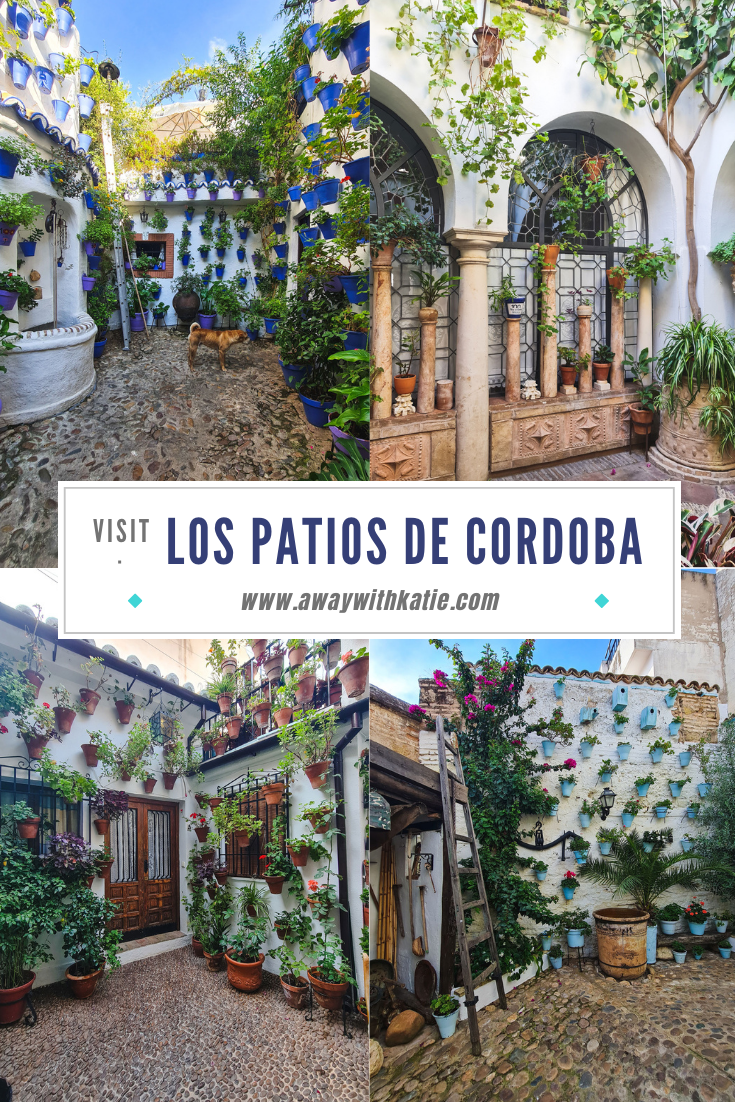
The Patios de Cordoba festival is held in May, and is unique to Cordoba. When the festival is on, the city comes alive with a floral explosion of colour. Private patios are opened up, and everyone is celebrating the beauty of flowers, gardens and tradition.

Los Patios de Cordoba History
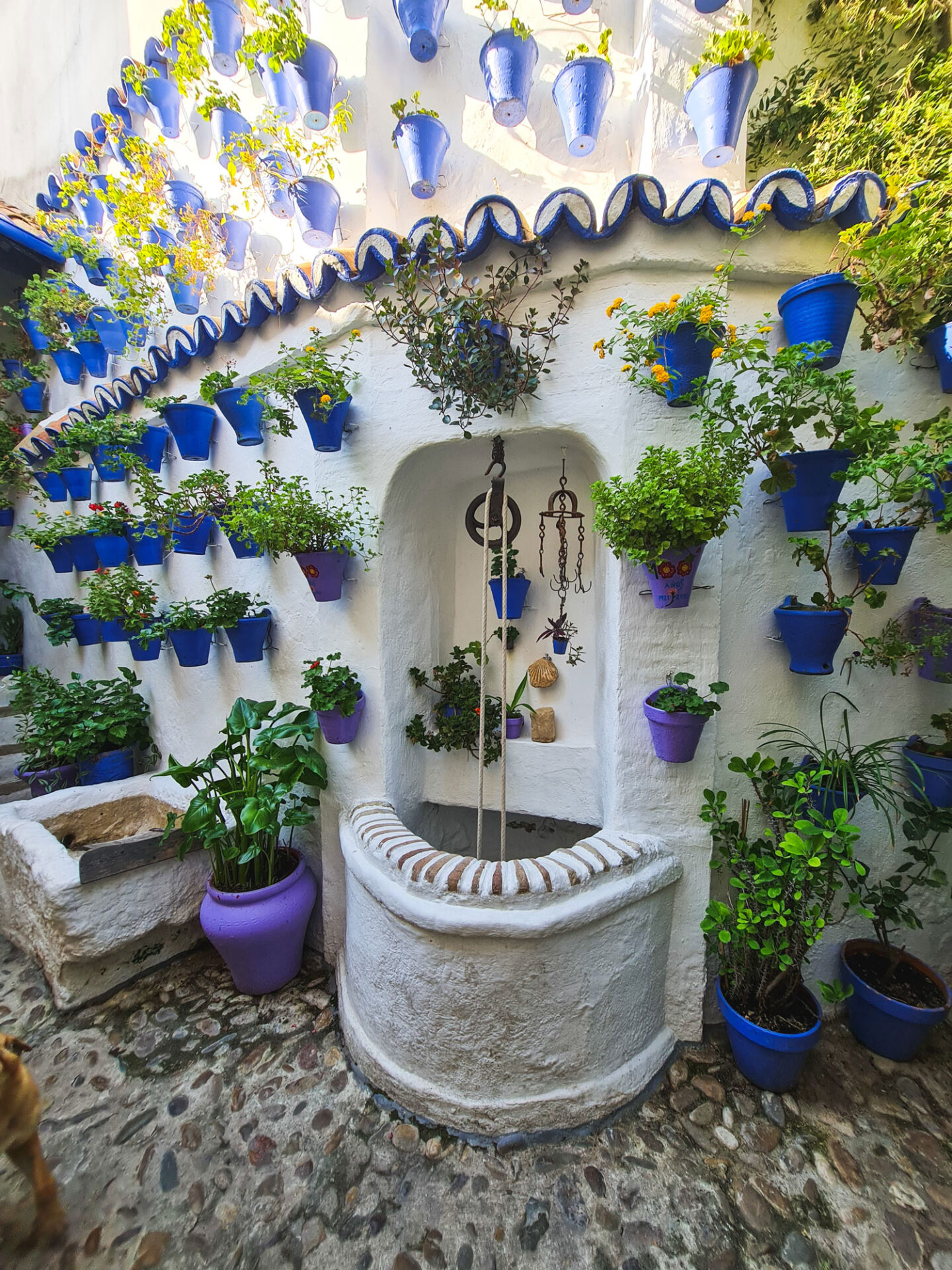
Patios are typical in traditional houses of Andalusia – homes were built around a central patio by the Romans and Moors. These patios were often furnished with a well, where the families who lived there would get their water. Vegetation, flowers and water features were added to the patios as a way of keeping the homes cool, and with all that, the tradition was created. In 1921, Cordoba’s city hall organised the first Patios de Cordoba festival, bringing competition into the mix.
Most of the patios and homes belong to one family, however, some may have been occupied by several families. Despite the patios in Cordoba being located within private homes, they do all open to the public during the festival and if visiting in May you will be able to walk around freely visiting various patios.
More information on Los Patios de Cordoba.

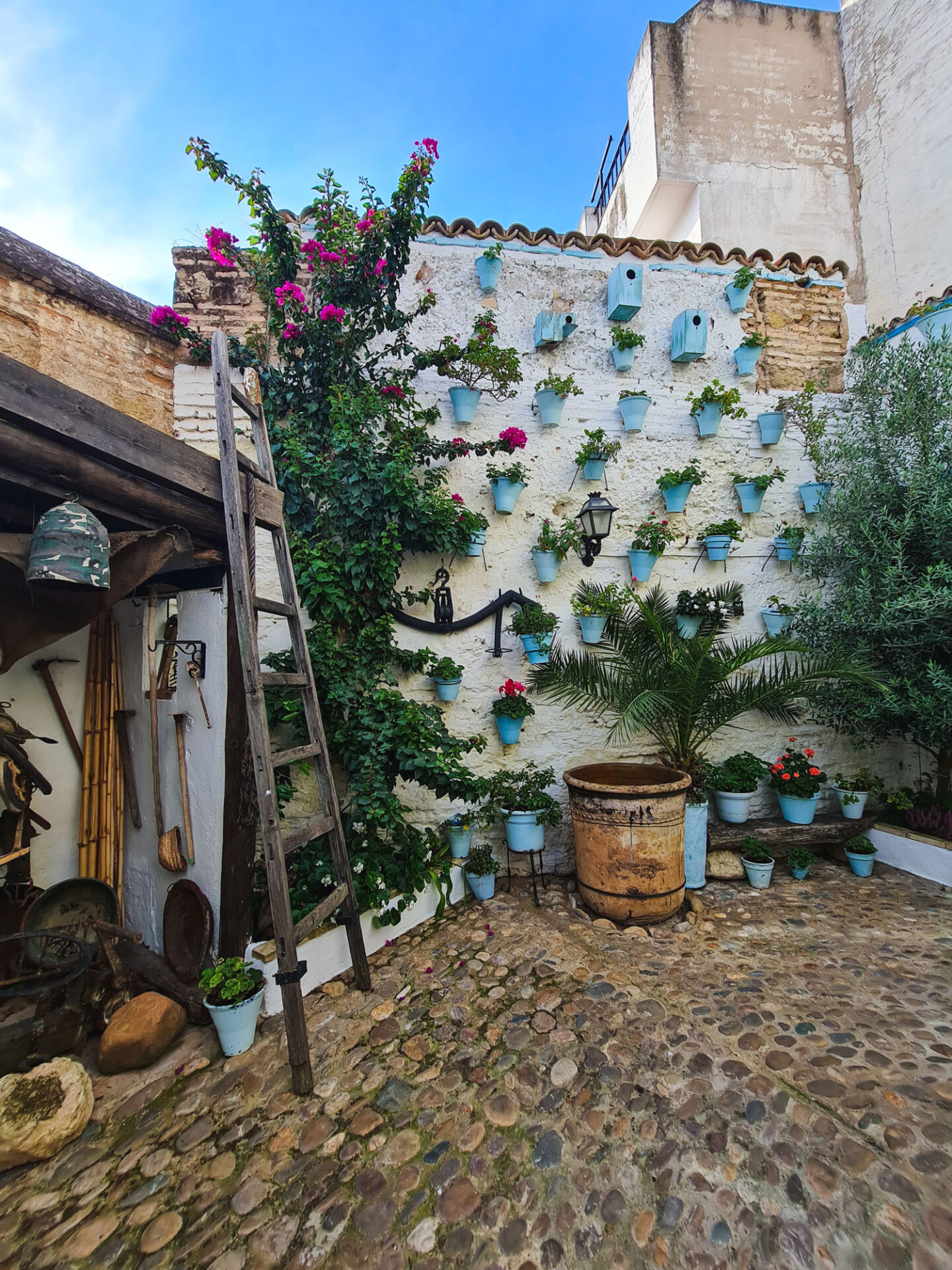
The photo above shows an installation that represents passing the tradition down to the family to keep it going. This specific blue is the colour used for all pots that are in public areas around Cordoba.
Visiting the Patios of Cordoba All Year Round
Not planning to visit Cordoba in May? It’s still possible to see the patios.
We visited out of season in September, and whilst the number of open patios was limited it was still worth the visit. We paid 5 euros each to visit 5 patios and were given a map and directions on where to start.
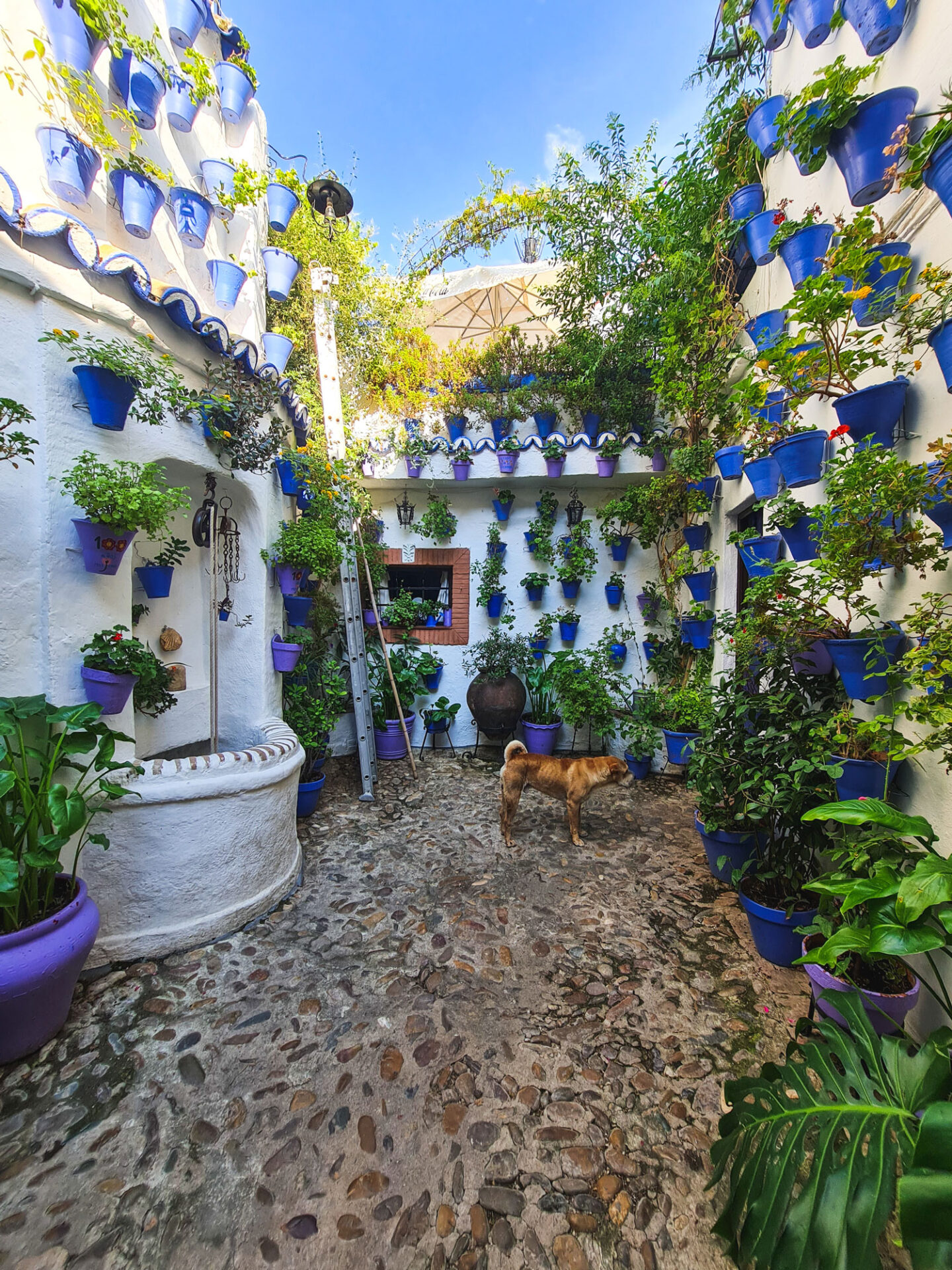
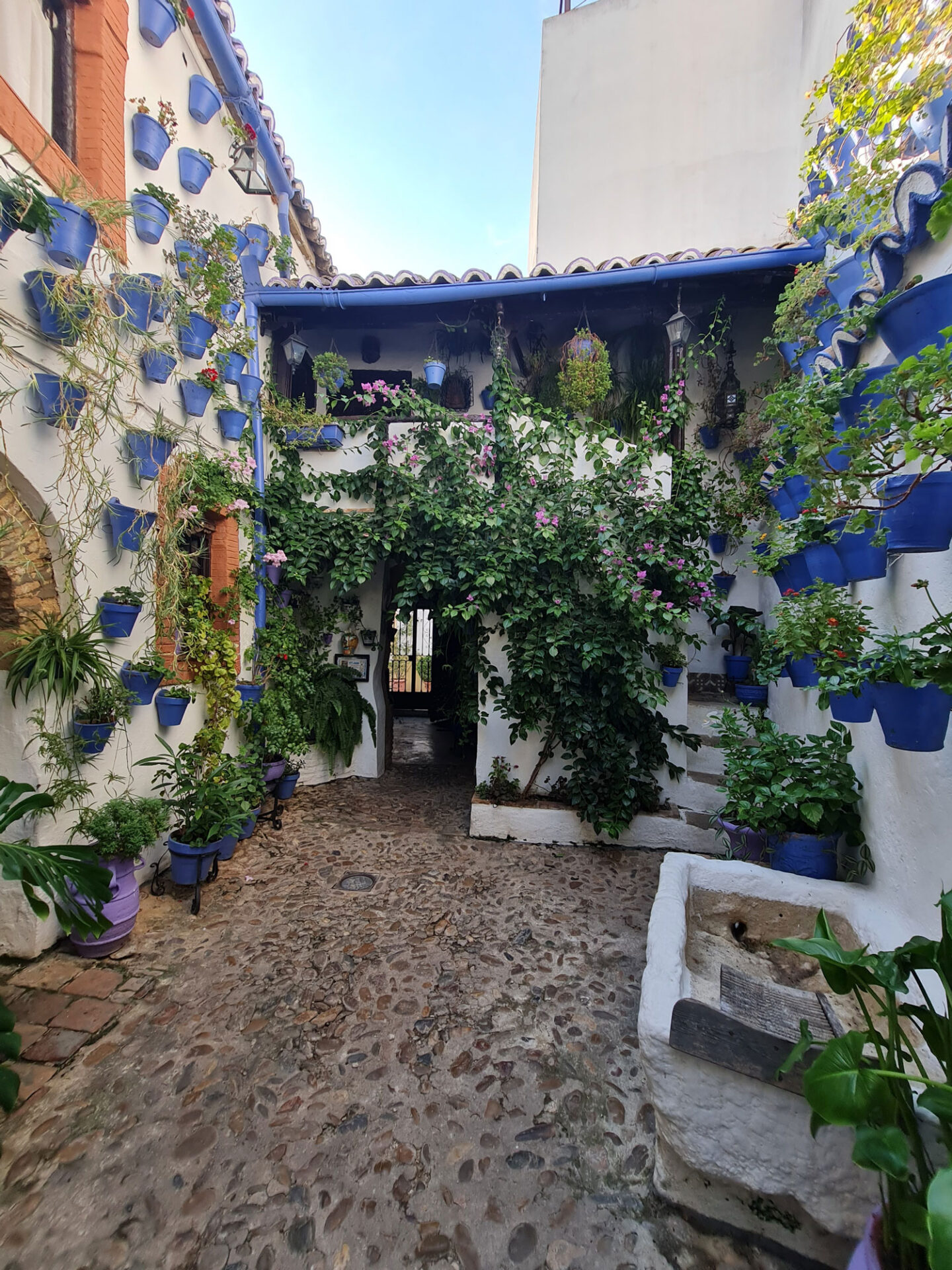
The unique thing about this mini-tour is that you are going to people’s private homes, and whilst you’re only outside in the patio area, it still is very residential because you’re standing on the patio right in the centre of each house. Within each one someone who lives there is around to let you in, stamp your card and answer any questions. Some were very interactive in telling us about their patio, and you could tell they really loved sharing.

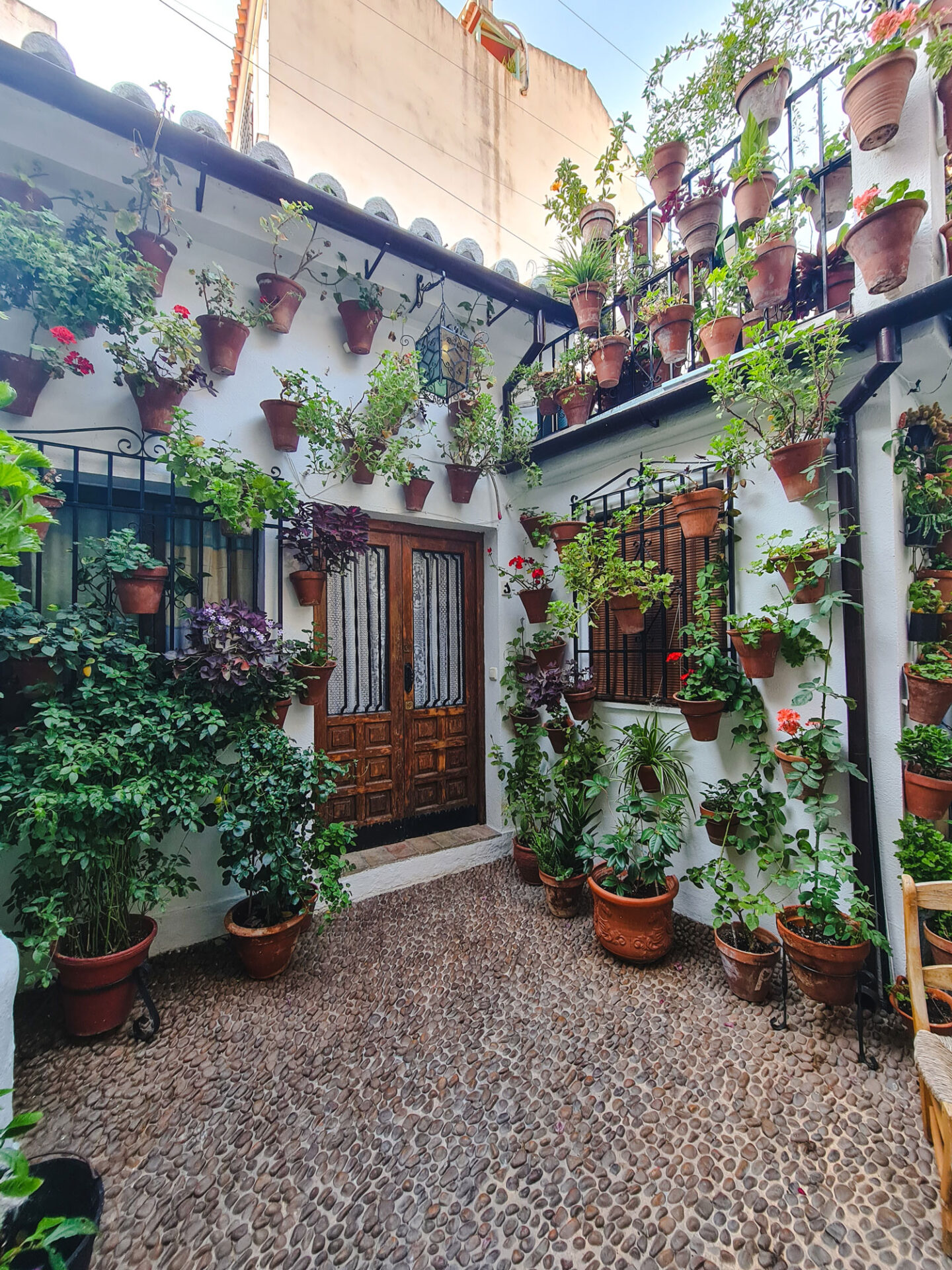
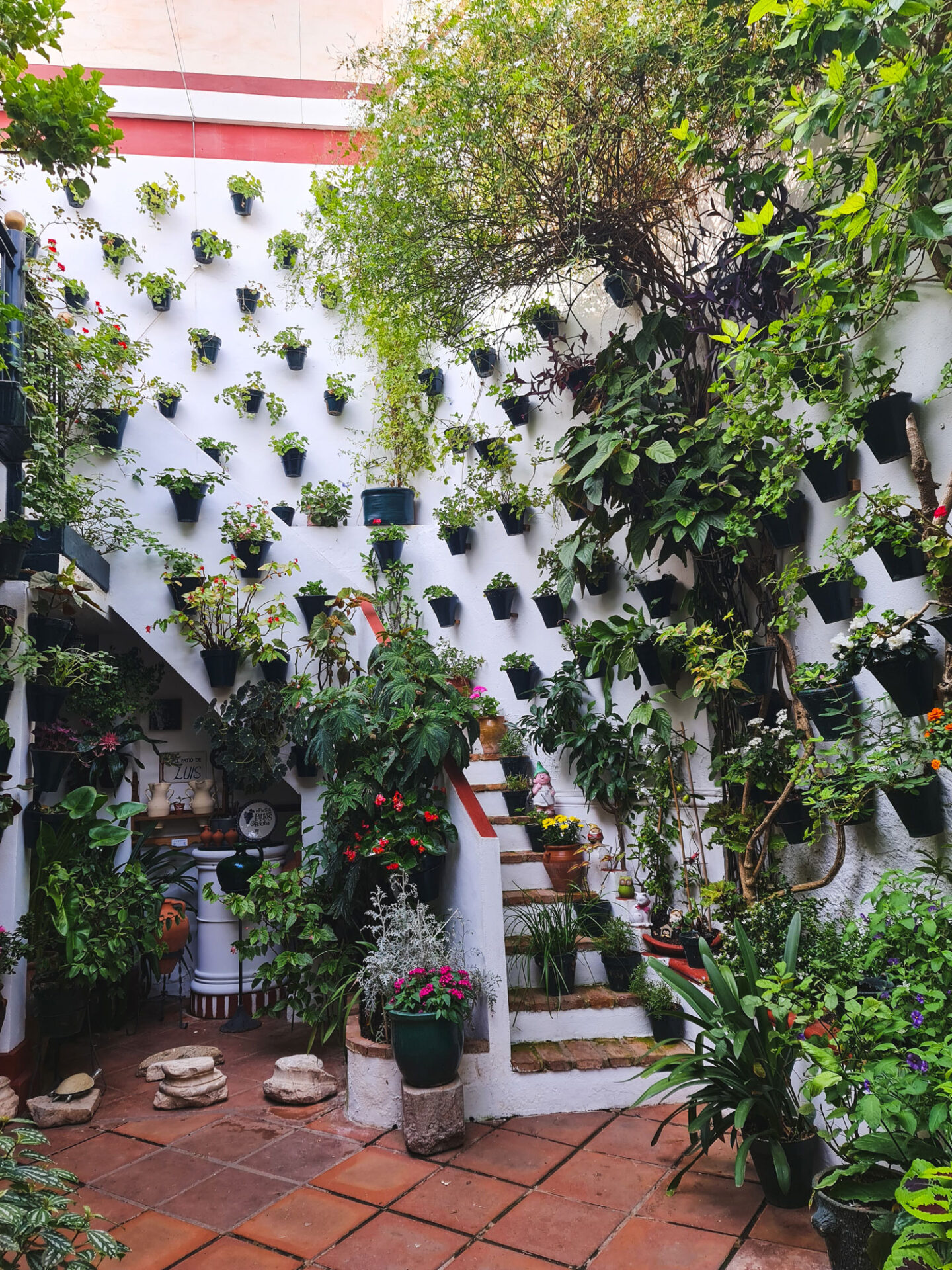
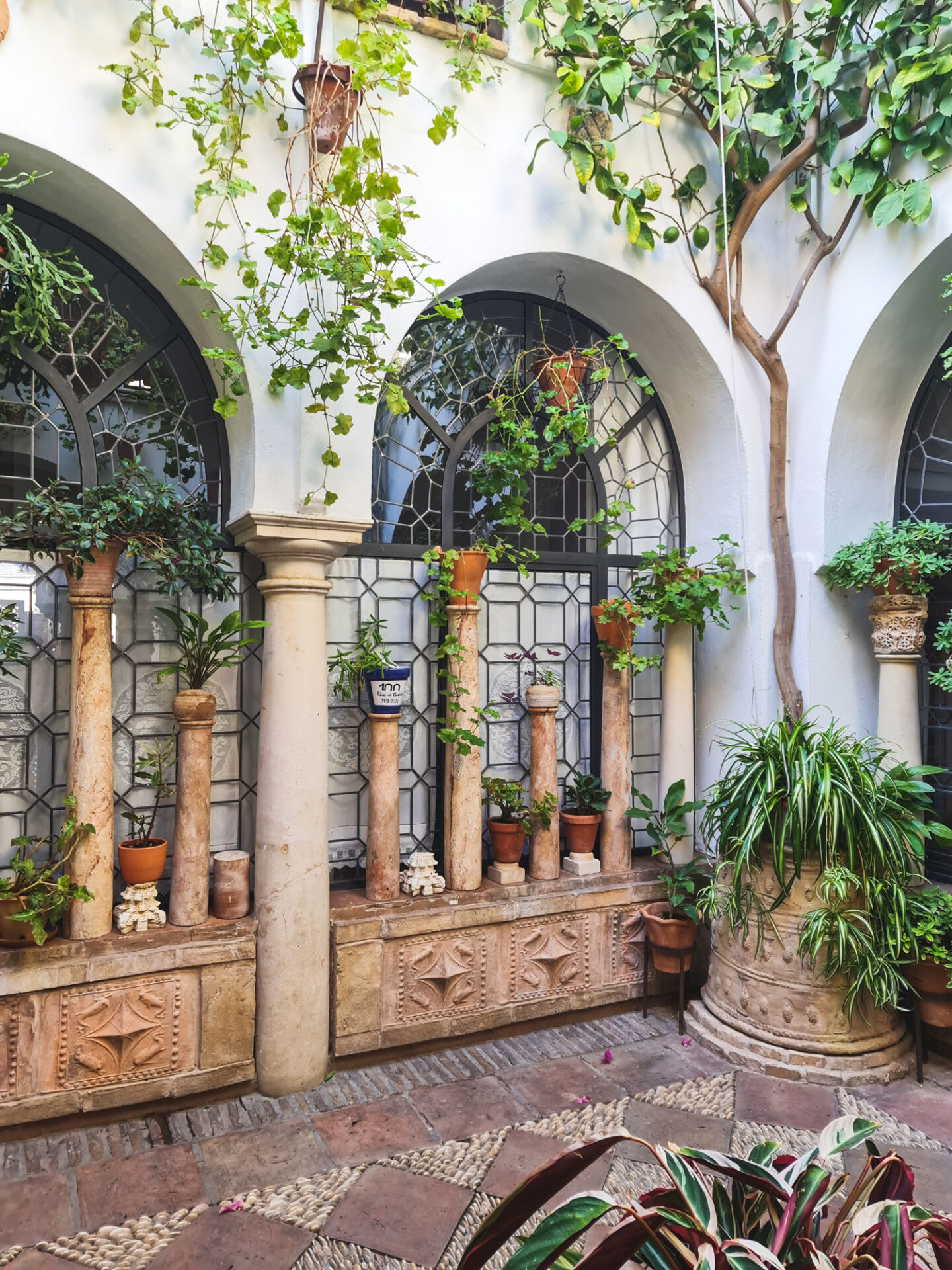
There are also free patios you can look out for. We just happened across one and left the woman in there a small tip as she told us loads of interesting information. Like, to compete in the festival your patio has to be manually watered. No hydroponics set up! Imagine watering all those plant pots regularly in a country that still hits above 30 degrees in September!
It should be noted that when siesta time hits in Cordoba, it really hits. The patios (and most things!) are closed between the hours of 2-5/6pm. We missed the shop at 2pm, so waited in Cordoba until 5pm so we could have a look at the patios and it was well worth the wait.
Los Patios de Cordoba Competition Rules
Oh it’s not just as simple as planting a few things and hanging some pots!
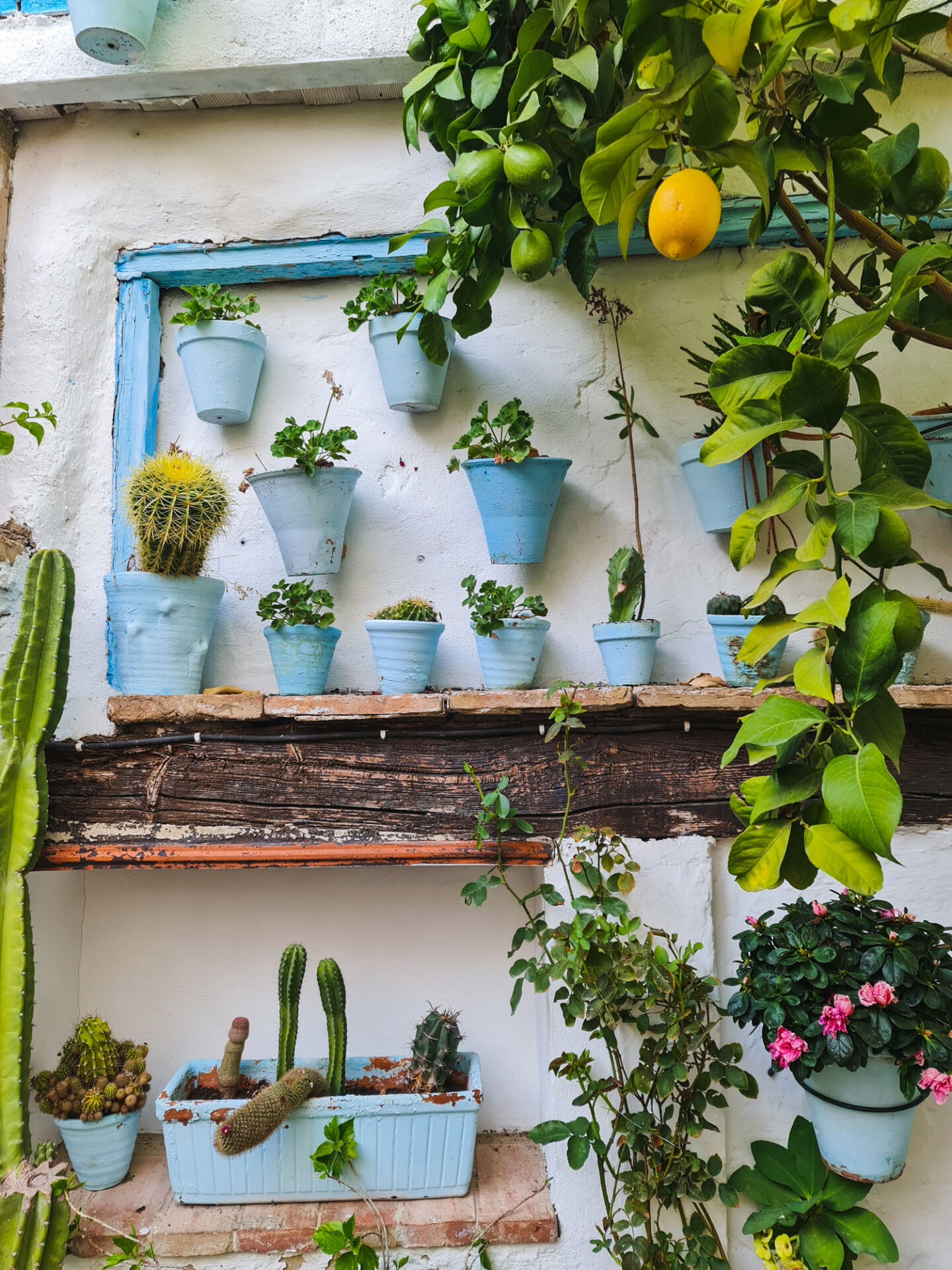
There are different prizes awarded for different categories. There are two architectural categories – tradition and modern. Elements such as floral variety and artistic use of water are taken into account. Only real flowers can be used, and as mentioned above they need to be watered manually.

More about Visiting Cordoba
Córdoba (often written as Cordova in English!) is a city located in the southern Spanish region of Andalusia. The city was founded by the Romans, and became a port city of importance and it was they who built the impressive bridge crossing the river. It then become the capital of the Moorish kingdom of El-Andalus and this is when the Great Mosque was built. After several centuries of additions, it became one of the largest in all of Islam!
The city was then reconquered by the Christians, and they kept the city as it was and built around what was already standing. This is why the Mezquita-Catedral exists today and why you’ll find so much of the Moorish architecture still within the city.
It also has the highest summer temperatures in Spain and Europe – and given we went in September and it was still hitting 34 degrees, that’s very easy to believe!
Other things to see and do include: visiting the Mezquita Cathedral de Cordoba, the Jewish Quarter (Juderia), the Alcazar de los Reyes Cristianos and walking across the bridge to name a few.
Have you ever visited Cordoba?